Saturday, April 3, 2010
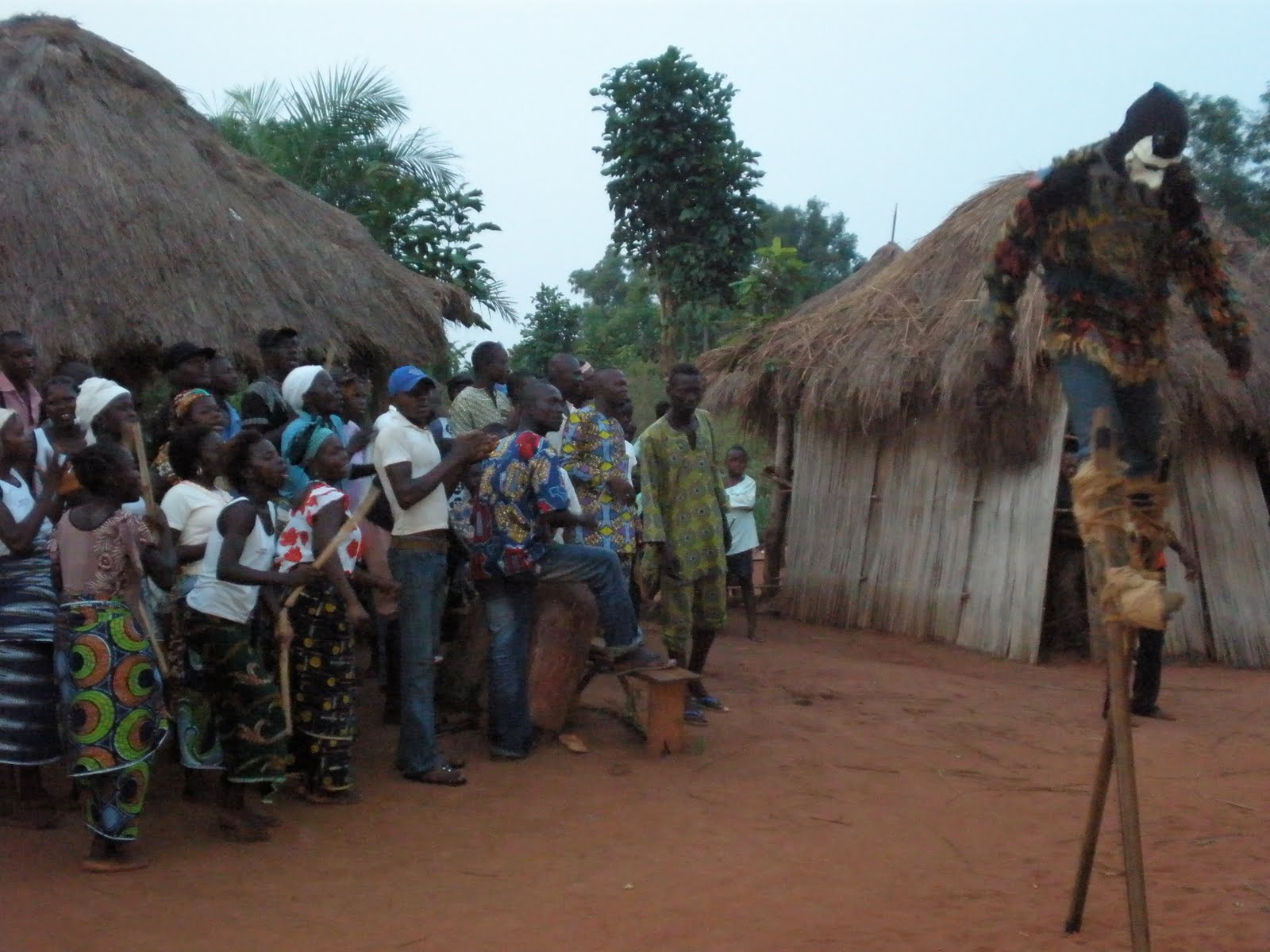
Agoh Ceremony
Saturday, March 6, 2010
Tuesday, March 2, 2010
It’s really unfortunate that Peace Corps volunteers don’t have regular access to social networking sites. If we could update our Facebook statuses or Tweet (feel like a tool just for using that word) on a regular basis like the rest of the iPhone- and Blackberry-toting world, it would be endlessly entertaining. Imagine a Peace Corps version of Texts from Last Night or F My Life. It’d be something like:
Spent all day trying to outrun the town crazy who has apparently made it his new and only objective in life to hug me.
Just sharfed in a field. Again.
Had to make an emergency drop trou manuver in [insert semi-public location].
Just realized my flour is swimming with maggots. AFTER I baked and devoured a batch of cookies.
While trying to ask where the toilet is in local language I accidentally said [insert something wildly inappropriate].
Found out the bracelet I bought at the market last month is actually a voodoo fertility charm.
Or anything that starts with
“So I’m in my latrine and…”
“So I’m eating what I think is chicken and…”
You get the point.
We already have a running list of “You Know You’re a PCV in Benin When…” but most of those are references that only those of us, uh, privileged enough to know Peace Corps Benin would get. I do think there should be some kind of Murphy’s Law for Peace Corps. Things like
-You will unintentionally flash every male in a 50m vicinity any time you attempt to mount your bike in African garb.
-The electricity WILL go out during the hottest part of the day when you need a fan the most.
-Insects will find even the tiniest holes in your mosquito net and eat you alive at night.
-The taxi you choose will a) brake down, b) attempt to break a Guinness World Record for number of goats and/or chickens in a passenger vehicle, c) load so much cargo on the top that either the back fender is constantly touching the road and creating sparks or the center of gravity is so high that you spend the entirety of your trip in constant fear of the car toppling and the family of 8 in the 2 seats next to you crushing you, d) all of the above.
Some volunteers do have regular access to internet, BTW. Whereas I’m about two hours from the nearest cyber so I usually just go every couple weeks, some volunteers have internet on their phones or wireless cards which allow you to get internet access anywhere you get phone reception. Apple computers, though superior to PCs in every other facet, are not compatible with these wireless cards, so even if I did want to get internet in my house, I could not. (WTF, Steve Jobs???)
Recent updates: I had a fever and the kind of all over sick feeling that begets this weekend so I was holed up in my house all Sunday. Went through all my college photos- relived Barcelona shot bars, tubing in Vang Vieng, a few too many Chi O events, and all the people and places that made up the last 4 years of my life. Seriously miss my friends, my closet, Coffee Bean vanilla tea lattes, Novel brunches, and Westwood sake specials. (Things I don't miss include LA traffic and the line at Maloney's, FYI.)
Saturday was a village clean up I’d helped organize. We chose 4 villages to clean up the last Saturday of every month. I was really excited and optimisitic about it up until the day before the clean up when my work partner at the mayor’s office and I did a tour to see what areas of the villages need to be cleaned up. It became apparent to me that he was only interested in pulling weeds and grasses, not in picking up what we Americans think of as trash. You can imagine that, since everything here is dirt road, grass and weeds are the norm. So Saturday 15 Beninese pulled weeds and carefully disposed of them about 10 feet from wherever they were pulled, while I trailed behind picking up plastic bags, wrappers, etc. which they then burned afterward without my knowledge. Pretty sure the plastic bags do more harm to your respiratory system burnt than they would do piling up on the side of the road, since apparently I’m the only one who sees it as an eyesore. It’s difficult to be an environment volunteer when your idea of the environment and theirs is almost completely opposite. Just visited the national forest 25km from Zè, which I expected to be, like in the US, a forest that is protected by the national government. Way off. It actually just means that it’s the government that pockets the money when the trees are cut down in that area. Good to know.
Just saw Kill Bill 2 for the first time and was highly unsettled by how shockingly unassuming a black mamba is. I was expecting an anaconda kinda thing- you KNOW when you see it. So my Larium dreams have a new star, which is good because I was starting to become immune to bats and cockroaches.
I often let neighborhood kids come in my house and just hang out. They don’t do much except play the voice message on my Build-A-Bear (“This is your grandma, and this is Kristen, and we love youuuu!) repeatedly and stare at me. But I find it less unsettling when they stare at my in my house than when they stand outside my screen door and stare. I feel like other people are going to see kids looking in and think there’s something to see and eventually a crowd will gather that I won’t be able to disperse. You think this sounds out there, I know it’s not. So one group of kids was here this weekend and when I finally got them to leave my house I realized one little girl had peed on my couch! The only person that has the right to lose their bowels on my furniture is me. Still pretty mad about it.
This is one of the hottest times of the year, before the rainy season starts up again at the end of this month. While I have no doubt that wouldI prefer this weather to other parts of the Peace Corps world where PCVs deal with below freezing temperatures, you should all still feel bad for me.
On a serious note, March 12 will be one year sine the death of Benin PCV Kate Puzey. There is a memorial in Cotonou that all the volunteers and American community in Benin will attend, and a separate memorial in Kate’s village along with a ceremony renaming the village’s primary school after her. Keep her family in your thoughts.
Saturday, February 20, 2010
it's as simple as something that nobody knows...
So I realize I rarely write any of my reflections on the greater problems I encounter here, not malnutrition, gender inequality, and such problems that I enoucnter often, but the very idea of development; what has been called the “white man’s burden.” Mostly I reserve those thoughts for my journal or conversations with other PCVs in which the circular, not-rheotical-but-yet-no-answer nature of the questions has as much to do with their depth as with the beer consumed. I had hoped from the beginning that Peace Corps would make or break a career in international development for me. I either would feel completely confident that this is the career track for me or would recognize that a lifetime of work in what can be an endlessly frustrating and fruitless sector would shake me of it and I could go on to a job in corporate America and donate to UNICEF, Oxfam, and the like during the holidays in order to quell my "white, liberal guilt."
I can’t say I’ve been pushed either way as of now. I will forever be a restless individual, never content to stay in the US for too long. However, I can’t imagine getting acclimated to a new culture every couple years, as Foreign Service individuals do. (Well, I think they live in American pockets within each foreign country so that you never have to really get acclimated to the culture like you do when you’re, say, living and working as the only American in a foreign village for a substantial period of time.) I can’t see myself living the rest of my life in America, nor can I see myself living the rest of my life outside of it. What I have realized is that I wouldn’t want to raise kids anywhere other else.
I came here hoping to have Jared Diamond-esque revelations about the inherent brilliance of the Beninese people and a vindication that it is the oppression of the Western developed world that keeps this part of the world in economic shackles. I do admire their culture, and hope to incorporate the generosity and hospitality of the Beninese people into my character before returning to the US, but, rather unexpectedly, I ended up falling in love with the US. Part of it has to do with the fact that everyone here loves the US. I am asked on a daily basis if I will bring some individual or their children back to the US when I go. I get marriage proposals on a every day from men and from women on behalf of their not-yet-potty-trained sons or already-thrice-married spouses. I realize in the US many of us grow up believing we live in the greatest nation in the world, and from some factual standpoints that may be true (i.e. military strength), but it seems preferable to growing up in a country where many people would abandon their country and culture completely for a chance to live in America. One would think I would return from an experience like this a simpler, less materialistic individual, but in fact I think I love commercialist America more than ever here. Kinda like how we eat up the Life & Style and People magazines here that most would never have read back home; devour Cup O’ Noodles and Oreos with a fervor unseen before.
There are certainly human rights to life, health, and education that are not guaranteed here. The life expectancy is too low; the infant mortality rate too high. More people die of dirty water and diarrhea each year than we can fathom. And yet, in the US we have traded those causes of death for those characteristic of a highly developed, highly industrialized nation. I don’t know how many people die of drug overdose, suicide, cancer, heart disease, obesity, etc. in Benin but it’s a miniscule proportion compared to the US.
too much hard thinking for the moment. much love :)
Saturday, February 13, 2010
Camp GLOW
The role of women in society at large is that of wife, mother, and housekeeper. Anything apart from this is a distant second. Young girls are housekeepers before students; the work they do around the house is more important, more valuable to the family, than anything that can come from the education they can get. Women’s education is viewed as a poor long-term investment because girls will one day marry and end up in another man’s home, supposedly at that point of no further use to her family. Misguided ideas such as the fear that educated girls are disobedient feed into this. Within and outside of the home, there are few educated women to be seen as role models and even fewer female teachers to encourage young girls in their studies.
It is estimated that the ratio of boys to girls here in middle school is 2 to 1 and that it drops to 4 to 1 by the end of high school, but I wouldn’t be surprised if the actual ratio is much more devastating. I was in a high school senior class yesterday in which there was one sole female, and the way classes are set up means that every class period is like this for her. I’m amazed that she is still in school! It is difficult to be different, a minority, in any high school classroom. In a Beninese classroom, where there is a culture of laughing raucously at anyone who volunteers a wrong answer and the general inability to ask for help from teachers and other students if you don’t fully understand a concept, this is amplified. This then becomes a double-edged sword; if parents know that the majority of girls who start high school never finish, there is less incentive to pay for the first year.
Pregnancy and marriage are common reasons girls drop out of high school here. Oftentimes in a situation of pregnancy the male is much older but if he is also a high school student he more than likely stays in school while the young woman is left with no option but to leave. Birth control can be difficult to obtain and can be culturally frowned upon: some men believe it gives their wives license to be promiscuous. If a man believes his wife should not become pregnant because he is sticking to traditional fertility calendars, he believes he can tell if she has been unfaithful or not. In many instances health workers are not authorized to give out birch control unless a woman has consent from her husband. Situations similar to this suggest that no matter how much education can be disseminated among women, it is men who make the final decisions in many women’s lives and therefore men who need to be educated.
One of the most disturbing factors in the gender unbalance in high schools is sexual harassment propagated by male teachers. At my local high school, every teacher is male, which is not uncommon here. The trading of sexual favors for academic ones is said to be endemic in Benin. Some call it “le droit de cuissage” (“right to the thighs”). If a student refuses a teacher’s advances, she may see her grade drop or some other form of reciprocation. Stop and think about that for a second. Endemic. I have been told by high school teachers, after explaining to a class of high school students how it shocked me to see such a low proportion of girls in their class, that there are less girls because they choose not to go to high school. They choose to resign themselves to dressmaking or selling prepared food for the rest of their lives; choose housework over homework; forget cultural and gender barriers, it was a choice. I can see then, that girls might choose to take themselves out of a situation like that. This is not to say that all student-teacher relationships are started by teachers; knowing that good grades and favored treatment in class such as answers to upcoming tests are payment for sexual favors, girls may be the ones making advances. The intention may be genuine-to finish high school and get a job outside of village-and a relationship with a teacher seen as the only lifeline in a system in which she is going against the current in every other respect.
Results of a survey conducted by a women’s rights NGO in 2007-2008 found that
-62% of students have known a professor to threaten a student who has refused their advances
-57% know professors who have changes grades in order to pressure students into sexual relationships
-65% of students know a fellow student who was impregnated by a teacher.
Outside of school settings gender inequality is pervasive in just about every aspect of life and culture here. Women who are disempowered in every other aspect may see no alternative but to concede if a sexual partner refuses to use a condom. A woman cannot refuse sex to a husband even if she suspects him of sleeping with others and possibly prostitutes. This perpetuates the spread of AIDS which is further complicated by the fact that woman are biologically 2-4 times more likely than men to contract HIV during unprotected sex and the horribly misguided belief that sleeping with a virgin will cure AIDS. Women may be forced into sex work as a result of cultural laws, for instance that of land ownership: as a woman she has no claim to the land, thus if she is widowed the land belongs to her sons and if she has been so unfortunate as to not bear her late husband any sons, she may be homeless and without options.
Other shocking practices are carried out here, many of which the true extents remain unknown, notably the trafficking of women and children and female genital mutilation. I don’t intend to mention those travesties just as a sidenote, but cannot comment on just how pervasive these practices are. I do know, however, that trafficking exists in my region and the FGM is estimated to have been practiced on 17% of women in the country, mostly northern ethnic groups. In one recent year, 222 victims of trafficking, likely all girls, were rescued by Beninese police. Imagine then, how many were not so fortunate, how many have been trafficked in previous years.
It is said that with economic independence, women no longer have to fight for their rights, respect, or empowerment; that it then comes naturally. However, in a society in which all housework, which in Africa can mean hours spent carrying water alone, and childrearing fall exclusively to women, there is little time for any income-generating activity.
I wrote months ago about meeting the woman who runs Benin’s Women and Development program: Probably one of the strongest feminists in the country, maybe one of the few who are familiar with the term, and yet she admits that when her husband has company over she does what is expected of her as a Beninese wife: resigns herself to the kitchen to prepare food and drink for the guests, even if it is other family members. In some cases women may spend several hours preparing food only to not be able to eat if their husband chooses not to or finds it unappetizing.
Remember “A Day without a Mexican”? That documentary-type film that came out whose billboards featured a rogue lawn mower plowing down the street sans driver? “A Day without Women” here would be similar. Buckets of water suspended several feet off the ground with no one to carry them, no lines at the well, no prepared food, no one taking care of children or sick, no selling or buying at the usually bustling West African village markets.
I see it in small, everyday but still disturbing things. Women must give the best taxis seats to men, men can take up as much leg room as they like while a woman and her infant are shoved against the door, etc. Then there is the culture of polygamy, which is a whole other more complicated chapter.
In response to the need for gender equality activities, in the hopes that something resembling a movement could be started, Peace Corps and USAID created what is now the Gender and Development program. One of its biggest activities is a summer camp, Camp GLOW (Girls Leading our World). Volunteers are able to bring young girls, just starting high school, to a week-long camp in which they are presented with themes of women’s empowerment that they may have never considered. I plan to participate in Camp GLOW the last week of June and bring a local 7th grade girl.
Now… we need help making this happen. You can donate to the Camp GLOW fund here: https://www.peacecorps.gov/index.cfm?shell=resources.donors.contribute.donatenow
Thanks in advance!
Friday, February 5, 2010
Lions, Tigers, and Beer: Dad and Jan visit Benin
The first of many visits here from family and friends has come and gone. I can wipe a little sweat off my brow. I sadly have very few pictures but Dad and Jan were surprisingly astute photographers; when I get those I’ll pass them on. The trip started with a minor catastrophe but other than that was probably my 7 favorite days in Benin to date.
A couple hours before their flight was supposed to land I went online to check if it was on time and the Air France website said “This flight has returned to Paris due to a technical error. No further information available.” I went from zero to basketcase in 60 seconds. I moped around the Peace Corps office sharing my sob story to any PCVs around and climbed into bed with a list of numbers to call the next day, reservations to cancel. THEN, as I’m falling into slumber that only comes after a good cry, 4 hours after their scheduled arrival time, Dad calls from a borrowed phone saying he’s at the airport in Benin! Dad and Jan made friends with the airport “bartender” (probably a 16-year-old in a shack that sells, among various natural sexual supplements, cold beer) while I made my way there. The first night was a whirlwind of confusion, emotion, and beer, the latter of which proved to be a trend lasting through the entirety of their trip. We had 3 or so hours of sleep before getting on a 9 hour bus to a town outside the safari park. The bus was the lap of luxury in my opinion: upholstered chairs, air conditioning, free entertainment (at ungodly volumes, granted), and a one-person-one-seat policy. This compared to my usual form of transportation in which at least 7 people are fitted into a 5 person sedan—my most recent trip reached an astounding TWELVE individuals—along with various livestock in the trunk and so much baggage on top that the car is taller than it is wide. (I also have an innate tendency to pick the most audacious of taxi drivers. I have now had four attempt to outrun police pulling them over. Two were successful.) However, Dad and Jan came from First Class seats and pre-flight champagne service. They were less thrilled with the ride. Beautiful views redeemed it somewhat. We literally crossed the entire country of Benin from south to north and they can confirm what I suspected- I really do live in the most beautiful place here.
We spent one night in the town outside of the safari park and met up with two PCVs who were in town for beers and a local specialty called tchook, a homemade beer-type drink served in mud huts and drank out of calabash bowls. The next morning was an early wake up for the several hour drive on to the safari park, named ParcPendjari. Our guide was a jovial Beninese man named Haziz who we loved because of his knowledge of the park and wildlife but moreso, his understanding of the best way to outrun charging elephants. A general day safariing is going out in the SUV just before daybreak for a few hours, then a lunch/nap break during the hottest part of the day, when most animals are lazing in the shade anyway, then a few more hours out until sundown. No giraffes or zebras, those are more East Africa. We saw crocodiles, hippos, elephants, baboons, several species of antelopes and birds, wild boars, and three lions. There is only one hotel with just a handful of rooms there; small but I guess the real excitement is the safari.
On our way out of the park, we visited waterfalls that happened to be located in another PCV’s village and ran into him there. Then another 10 hours in a taxi back down south though this time we paid a Beninese fortune to rent out a taxi instead of taking the bus. I had thought Zè would be low key and relaxing, like my life in general here, but since Dad and Jan were only here for 2 days we had a string of lunch and dinner dates and introductions. Meals can be difficult- Beninese are notoriously hospitable toward guests but very easily offended if you don’t let them let you eat them out of house and home. Normally I ensure that I space my meals with Beninese at least a week apart to ensure that my stomach has time to recover and shrink back to normal size. You have to finish pretty much everything on your plate, lest you insult the cook which in most cases is a woman who has been slaving away to create that meal all day long and who herself will not get to eat it. We had several chickens killed in our honor and even a duck (both of which are expensive and rare here) as well as some Beninese specialties including pate rouge, fried plantains, and yam pilee. Thankfully Dad and Jan liked the food so I didn’t have to make many excuses for rude behavior such as not licking your plate clean and sucking the marrow out of the bones. The first family to host us is one I’ve blogged about before- my landlord/carpenter/handyman and his family compound with easily over a hundred people and around thirty-five separate buildings. Both Dad and Jan and the family had many questions so one of the brothers who speaks French well translated French to Fon and visa versa and I translated English to French and visa versa.It was a pretty beautiful thing, the three languages. I wish I could paint a better picture of the setting: all adult male members of the family plus Dad, Jan, and I sitting in an outside gazebo made of wood posts and thatched roof, surrounded by what seemed like (and probably actually was) a hundred kids. They had carried their entire living room set up- sofa, chairs, tables-outside. It was the kind of dark that only occurs in places where there is no electricity, just a single light on the table. The next morning that family took us on a three hourmoto ride to a national forest and back. It was stunning; pictures don’t do it justice. There is some cutting that occurs and the state sells wood for a profit but because it is not a slow-growth forest trees are replenished in just a few years. We had lunch with my friend Eleonore and her husband. Eleonore killed the duck for us and though we ate it all and praised her for it I’m still hearing hell for none of us finishing the third course she served us. I think we may have gone into food comas immediately after that point in time and woke up just in time to do introductions at the mayor’s office before the business day ended. Dinner was with the mayor, a formality I hope I can avoid with future guests visiting from America. No use detailing that. The next day was their last day here. We took the two or three-hour drive into Cotonou which, Dad and Jan can attest, goes quickly from the paradise of Zè to the vileness of Cotonou. I exaggerate but in comparison it does seem a bit like that. Had one last great meal with wine then it’s back to rice, beans, and pate for me. Saying goodbye this time was WAY better than saying bye when I left America, which was probably the saddest day of my life so far.
Dad and Jan can tell you their impressions of Benin and its people but in a word it would probably be friendly. Nowhere in America do strangers elicit wide smiles and waves (then again, in our mixed culture you can’t tell who’s American and who isn’t and here it’s blatantly obvious). I can only hope that every visit is just as amazing as this one. I’m aiming for zero stomach issues next time though.
As happens any time after I spend a lot of time in the company of other Americans, it takes a little adjusting back to village life. Your nights seem a little lonelier than before, work options seem scarcer, communicating just that much harder. Luckily we had a string of meetings a week after Dad and Jan left so I’m in the comfort of other Americans again, weaning myself off until my mom and her friend Cheryl visit in March…
Wednesday, January 20, 2010
Oh 2010...
Many people ring in the new year with a midnight mass then dance and sing afterwards til the wee hours. I opted to save my energy for the next day so for the first time that I can remember I slept through the stroke of midnight. I went to mass the next morning but apparently the fun people were sleeping. I spent the afternoon at the mayor’s house, where the kids ran around, the women cooked, and the men watched TV, ate, and drank. I was promised dancing but when I was there the women were hard at work crushing peppers, onion, and tomatoes and cooking goat, chicken, plantains, and rice over traditional three stone stoves. Later in the day kids get dressed up and go house to house eating families’ leftovers. Kinda like trick-or-treating. Kids of well off families and adults are not supposed to do this, however, and if they do they lose respect. I ended the day sitting with my friend and her kids, laughing and spooning out leftover portions to kids who came by. Much more low key than I had anticipated but much enjoyed nonetheless.
The entire month of January Beninese visit family and friends in other villages and make trips to the village they grew up in, usually their father’s village. To the repertoire of greetings is added “Kudo Whey” or “Bon Fete.” January 10 is the big voodoo holiday here and though we were in Porto Novo for training my friend Kara’s lives just 15 minutes outside the city so we were able to see her village celebrate. For most of the afternoon and evening people stand in a big circle, older women dressed in a mélange of fabric strips fashioned around their upper arms and waists. The entertainment is the zangbetos, which you may or may not remember is a big haystack looking creature that is central to the voodoo tradition. The zangbeto is said to come from the sea and has two responsibilities: patrolling the streets at night and providing entertainment for voodoo celebrations. The Beninese believe there is no man under all that hay. Each village or neighborhood has it’s own zangbeto so there were a few there that day. They mostly dance and charge the crowd, at which point everyone at that corner runs in fear. You aren’t supposed to touch it, especially if you’re a woman, but the zangbeto actually approached our group of 4 Americans in the middle of his act and told us we could take pictures with him if we gave him some money. I can only imagine what a nonhuman mobile giant haystack spends his money on.
The two weeks in Porto Novo were like a much needed vacation: TVs with CNN, rooms with ceiling fans, showers (cold, but I’ll take it), many foods we hadn’t seen in months like salad and beef, and, best of all, American company. I definitely regressed in my French and Fon but that’s a small price to pay. The trade off was a hellish 8am to 6pm schedule every day but Sunday. I realize that is a normal work week for many Americans but it’s hard to adjust to such a slow-paced society as Benin and, as we’re seeing, even harder to adjust back. Our training covered HIV/AIDS education, designing and implementing projects, applying for funding, seed collecting and planting, and potential and difficulties at each respective post. We alternated between expensive ($5) meals of steak and mashed potatoes with cheap ($0.20) meals of rice and beans so as to not blow our entire monthly allowance in a week, and between nights together sampling West African brews on the roof of our hotel (which did not have a ledge and, in hindsight, was a really stupid idea) and low-key nights watching episodes of Arrested Development, The Office, and It’s Always Sunny in Philadelphia from people’s external hard drives. One particularly awesome night we watched the first of Benin’s games in the Africa Cup (soccer, for those who don’t know). One of the outside bar/restaurants in town set up a projector screen and we cheered on our team, Les Ecureuils (The Squirrels), alongside other Beninese (all men, not surprising). The Squirrels are about as intimidating as UCSC’s Banana Slugs, but conveniently it rhymes with “Allez” thus making “Allez, Allez, Allez les Ecureuils!” an awesome cheer. We played Mozambique and tied 2 to 2 but lost a few days ago to Nigeria and are now out of the running.
This last weekend we spent making our way back to each of our villages. I only had 3 or 4 hours to go but many people’s trips took the entire weekend. A big bus traveling with 3 PC volunteers crashed into a semi on Sunday and, though fortunately they are fine, several passengers in the front of the bus died and a Japanese volunteer was in the hospital. That combined with the news of two suicides in my hometown (not people I knew, but horribly sad nonetheless) and the withdrawals from American company have made for a somber last couple days.
Thankfully I have my dad and Jan coming tonight!